
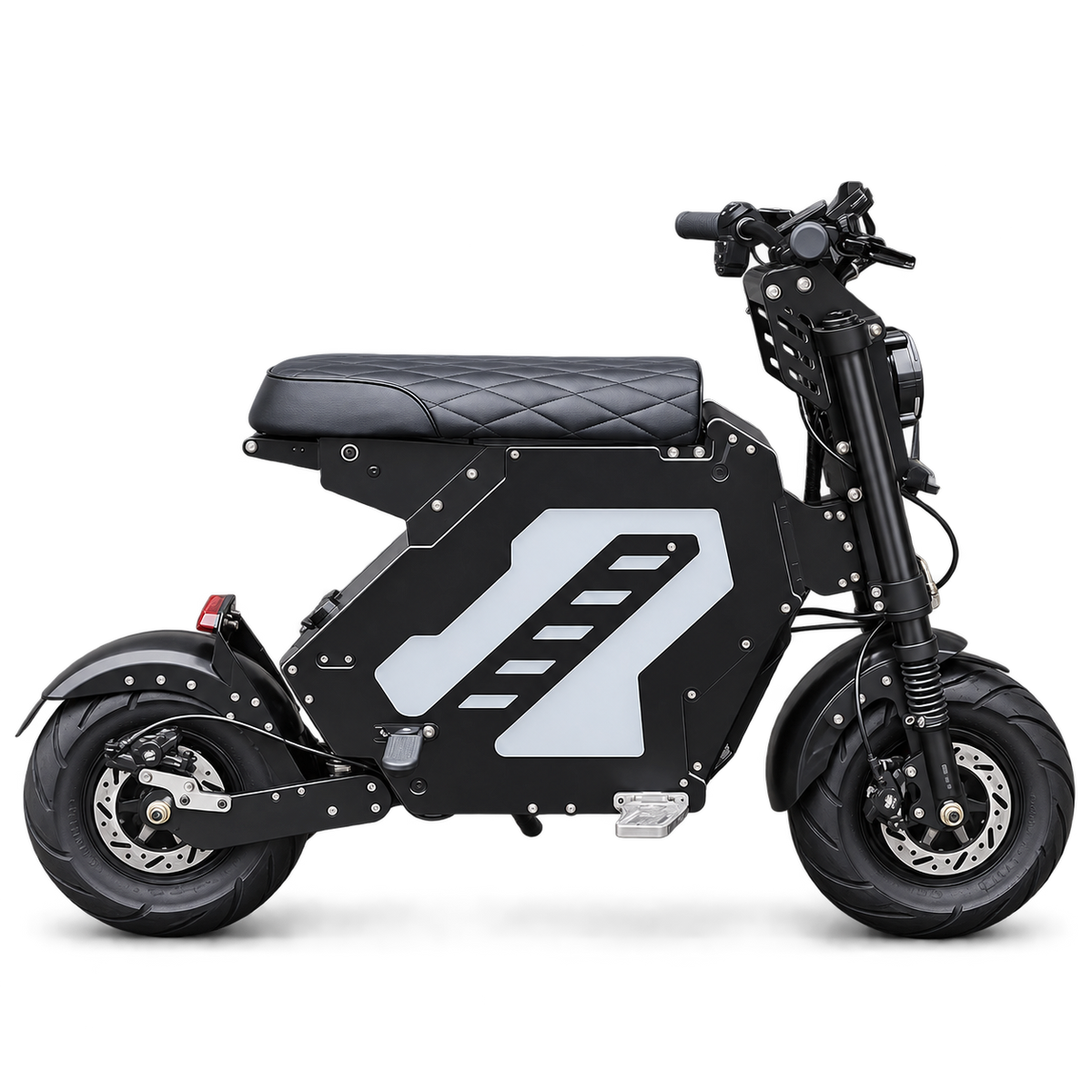
An electric scooter with a seat and a standing scooter answer different riding preferences. Start by choosing the position you want to use, then compare the complete vehicle: fit, storage, carrying requirements and the exact equipment included.
A seat alone does not establish comfort, range or suitability for your journey. This guide provides a comparison checklist, not a riding test or a claim that one format suits every rider.
Identify the type of seated scooter
There are two distinct buying questions: choosing a vehicle designed around seated riding, or choosing a standing scooter with a compatible seat accessory. Confirm which arrangement a listing describes. Ask whether the seat is standard equipment, a separately purchased option or simply shown in a promotional photograph.
The Yisuntrek Molo5 product page identifies seated riding as part of its format. The cover image comes from our Molo5 media library and illustrates that format; it does not identify a particular battery or motor version.
Seated vs standing: what to compare
| Priority | Seated option | Standing option |
|---|---|---|
| Rider fit | Check seat height, handlebar reach and foot-support position | Check handlebar height, reach and usable deck space |
| Storage | Measure the complete vehicle with its seat fitted | Check actual upright and folded dimensions |
| Carrying | Confirm complete weight and the intended handling method | Confirm complete weight; standing format does not guarantee portability |
| Equipment | Separate the seat and included supports from optional accessories | Confirm what is supplied and whether any seat option is documented |
| Distance | Ask for range evidence for the selected configuration | Apply the same configuration-specific check |
Choose fit before comparing maximum figures
Make a list of the measurements you need from the seller. For a seated candidate, include the seat-to-handlebar relationship and where your feet will rest. For a standing candidate, include the usable deck area and control position. Product photos can help you understand the layout, but cannot confirm how it fits you.
If a demonstration is available, use it to assess the exact vehicle rather than treating another model's review as a substitute. Record questions that remain unanswered. Avoid choosing a format solely because a description promises universal comfort or uses a large speed figure.
A seat accessory is a separate compatibility decision
When considering an accessory seat, request documentation naming the compatible scooter model and version. Ask what mounting hardware is included, whether the seat changes the storage dimensions, and whether it must be removed for the documented folding process. Use the manufacturer's instructions for the exact combination.
For example, Segway lists a seat kit within its electric scooter accessories. That illustrates a separate accessory offering; it does not establish compatibility with a Yisuntrek model or with every Segway scooter. An accessory's appearance is not a compatibility specification.
Compare the whole trip
Consider a hypothetical rider with ground-level storage who prefers to sit. A seated model may belong on that rider's shortlist, but the doorway measurements, vehicle weight and configuration still need confirmation.
Now consider a rider who regularly carries a scooter upstairs. That rider needs verified handling information before deciding between formats. Removing the seat from the comparison does not by itself resolve the carrying requirement.
For either case, use our route and storage checklist and range comparison guide. Check the rules for your intended location with the relevant authority; the presence or absence of a seat does not answer that question by itself.
Questions to settle before ordering
- Is the seat included in this exact configuration?
- What are the complete dimensions and weight with the selected equipment?
- Which measurements help me assess the riding position?
- If a seat is optional, what documentation confirms compatibility?
- What evidence supports the range claim for the version I selected?
Keep the answers together with the model and configuration details. Choose the riding format you prefer only after checking that the complete package fits your routine.
Updated October 9, 2026.